

Michele Bonfiglioli's book offers an innovative vision of organizational change in Italy, integrating culture and technology. It focuses on the importance of people in the corporate transformation process. Through case studies, it becomes a useful tool for leaders who want to implement Lean Thinking.
Discover how to transform your business vision through 25 years of Italian experience
The Italian industrial landscape is undergoing a profound transformation that requires a cultural shift before a technological one. It's no longer just about optimizing costs or eliminating superficial inefficiencies, but rather about redefine the very identity of organizations to make them resilient in the face of global challenges. In this scenario of uncertainty, the new book by Michele Bonfiglioli, titled “25 Years of Italian-Style Lean Thinking”, it presents itself as a valuable resource for anyone wanting to understand the dynamics of modern management. Through these pages, the author does not limit himself to presenting an academic theory but shares a long journey experienced in the field, explaining how lean philosophy has evolved to respond to the challenges of complexity, sustainability, and digitalization.
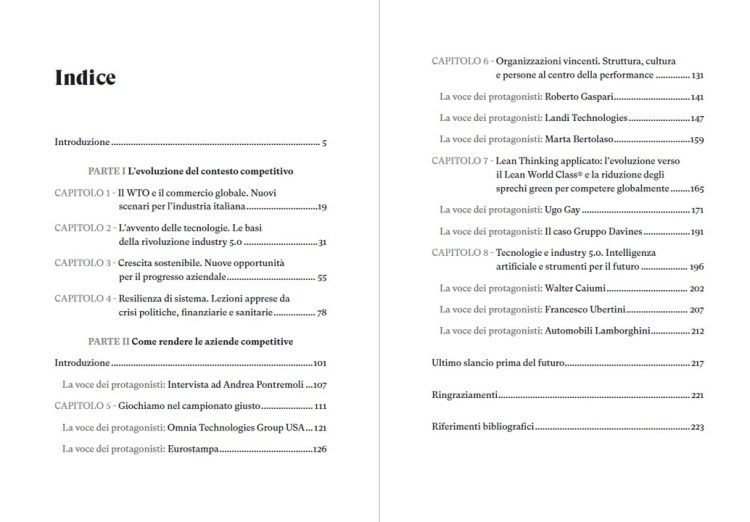
The book is structured as a systematic examination of the key milestones that have marked organizational change in recent decades. The author begins by examining the roots of lean thinking and its establishment in Italy, explaining how this philosophy has been successfully adapted to our production excellence. Ample space is dedicated to technological integration, describing the crucial shift towards Industry 4.0, where technology ceases to be an isolated cost and becomes the enabling engine of strategy.
Particular emphasis is placed on the human factor and value culture: Michele Bonfiglioli deeply reflects on the role of people, emphasizing that true transformation cannot exist without a change in mindset that starts with leaders and involves every level of the organizational chart. The work is enriched by direct evidence and excellent case studies, with contributions from prominent figures in the Italian business landscape. These examples offer a realistic glimpse into how leading companies have interpreted Lean Thinking to overcome critical moments and project themselves into the future, making the text a compendium of good practices and forward-thinking visions on tomorrow's competitiveness.
As this is a volume that intertwines strategic analysis with operational findings, the text lends itself to a critical and detailed reading, ideal for those seeking food for thought to transfer to their decision-making tables. Each section is structured to stimulate methodological comparison, making the volume a useful resource for both individual study and executive training. For those who wish to delve deeper into the topics discussed, consult the complete press review, or view related multimedia content, please refer to the official documentation made available by the author.
Book Index
Frequently Asked Questions
The main objective of the book is to provide a clear and practical guide on how to implement Lean Thinking in Italian companies. The author, through his direct experience, seeks to explain how lean thinking can help redefine an organization and make it more resilient. Bonfiglioli does not limit himself to theorizing but also offers concrete examples of companies that have adopted these practices. The book therefore becomes an essential tool for leaders who want to adapt to modern challenges. This approach reflects an urgent need in the Italian industrial landscape.
The integration of technology is one of the key points discussed in the book. Michele Bonfiglioli analyzes the transition towards Industry 4.0, emphasizing how technology should not be considered merely as a cost, but as a fundamental element for business success. Through the adoption of new technologies, organizations can improve their processes and become more competitive. Furthermore, the book presents real-world cases that demonstrate how this integration has had a positive impact on companies. The author invites readers to view technological change as a driver of strategic innovation.
The human factor is considered crucial for organizational transformation in the book. Michele Bonfiglioli emphasizes that without people's involvement, there can be no true transformation. The book stresses that leaders must be the first to change their mindset and involve all levels of the organization. The theme of continuous training, necessary to prepare staff for change, is also discussed. Through concrete examples, it is shown how people are a fundamental resource for successfully implementing Lean Thinking.
The book presents a series of case studies illustrating how Italian companies have successfully applied Lean Thinking. Michele Bonfiglioli offers practical insights and detailed analyses of these experiences. The companies featured are leaders in the Italian business landscape, sharing their winning strategies. These cases serve not only as examples but also as inspiration for other business leaders. In this way, the book becomes a compendium of best practices applicable to the Italian context.
